City of Lawrence, Your site for city services.


Household Hazardous Waste

Printer Friendly Household Hazardous Waste Guide Printable PDF (opens in new window) PDF 200K

WHAT IS HOUSEHOLD HAZARDOUS WASTE?

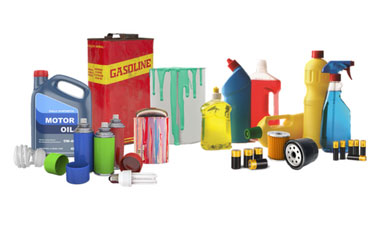
Household hazardous waste represents a wide variety of wastes which are produced as a result of normal household activities. Among the most common of these are:

  • pesticides, paints and varnishes
  • paint thinners and other solvents
  • motor oil, antifreeze and other automobile fluids
  • household cleaners, polishes and waxes
  • wood preservatives, photo and hobby chemicals
  • swimming pool chemicals and batteries

Each of these products may pose a threat to sanitation workers or public health and the environment when improperly handled or disposed. Household hazardous waste discarded with other trash may contaminate the air or groundwater, react or explode in waste compactors, or injure personnel handling these wastes. Improper disposal to sanitary or storm water sewers may damage septic systems, sewage treatment plants, drinking water supplies, corrode plumbing, or cause treatment plant sludge to be hazardous.

Homes are full of hazardous waste. Look for the words Danger, Poison, Warning or Caution on the product label. Danger and Poison are the most hazardous products. Warning and Caution are less hazardous products. A waste is classified as hazardous if it has one of the following characteristics:

  • Ignitable
  • Corrosive
  • Reactive
  • Toxic

Ignitable

Flammable. Burns easily. Paint, thinners and other solvents, and auto products are the most flammable home products. Look for words on the product label like:

  • "Do not use near heat or flame."
  • "Combustible."
  • "Do not smoke while using this product."

Corrosive

Eats through materials (for example, acid). Oven cleaners, drain cleaners, toilet bowl cleaners and auto batteries are common corrosive products. Look for words on the product label like:

  • "Causes severe burns on contact."
  • "Can burn eyes, skin, and throat."

Reactive

Can explode when exposed to heat, air, water or shock. There are few consumer products still on the market that are explosive (except for fireworks).

Toxic

Poisonous or causes long-term illness, such as cancer. Pesticides, paint thinners, many auto products and some cleaners are toxic. Look for words on the product label like:

  • "Harmful or fatal if swallowed."
  • "Use only in a well-ventilated area." (This means product fumes are toxic.)

Improper use of hazardous products present two types of dangers to health and the environment: acute or chronic. Acute effects are immediate and characterized by severe symptoms with a sudden reaction. Chronic effects are gradual and occur through repeated exposure over an extended period of time. To avoid these dangers, use hazardous products according to the label directions. If you have leftover household hazardous products please dispose of these wastes through the City of Lawrence/Douglas County Household Hazardous Waste Program.

HOUSEHOLD HAZARDOUS WASTE PROGRAM

Increased Hours of Operation, Increased Flexibility, Increased Opportunities to Dispose of Hazardous Waste Responsibly!

The City of Lawrence/Douglas County Household Hazardous Waste Facility is accepting hazardous waste from Douglas County households throughout the year by APPOINTMENT ONLY. Call the Waste Reduction & Recycling Division at 785-832-3030 to schedule a drop-off appointment for any unwanted paint, pesticides, cleaners, old mercury thermometers, and batteries. There is no fee to Douglas County households.

How the Household Hazardous Waste (HHW) Program Works:

  • Call 785-832-3030 to schedule a drop-off appointment.
  • Drive to the HHW facility (directions provided by staff). Make sure all your hazardous products are labeled.
  • A Hazardous Waste Technician will meet you at the HHW facility and unload the hazardous waste from your vehicle.

For your safety and ours, all hazardous waste drop-offs are by appointment only!

Need paint, pesticides or cleaning supplies? Household hazardous products brought into our facility that are in good, usable condition are set on our Product Reuse shelves! Come shop our shelves. Everything is FREE. For more information about the Product Reuse Program, click here. Please call the Recycling Staff at 785-832-3030 for a list of available products.

MATERIAL ACCEPTED AT THE FACILITY

Pest Control Products (Pesticides)

  • Fungicides
  • Herbicides
  • Weed B Gone
  • Roundup
  • Insecticides & Insect Repellent
  • Mothballs
  • Diazinon
  • Chlordane
  • 2,4-D
  • Rat Poisons
  • Dioxin Pesticides

Household Cleaning Products

Oven Cleaners, Toilet Bowl Cleaners, Drain Cleaners, Disinfectants, Carpet Cleaners, Floor Cleaners, Spot Removers, Abrasive Cleaners & Powders, Ammonia Based Cleaners, Furniture Polish, Bleach

Home Improvement Products

Latex Paint, Oil Based Paints, Rust Inhibiting Paints, Thinners & Turpentine, Furniture Strippers, Wood Preservatives, Stains & Finishes, Caulk, Adhesives

Automotive Products

Antifreeze, Car Wax & Cleaners, Gasoline, Used Motor Oil, Transmission Fluids, Brake Fluids, Car Batteries

Miscellaneous Products

Household Batteries, Nail Polish & Removers, Chemistry Set, Mercury Thermometers, Mercury Thermostats, Aerosol Sprays, Fluorescent Light Tubes & Bulbs, Pool Chemicals, Photographic Chemicals, Inks, Liquid Cooking Oil

MATERIAL NOT ACCEPTED AT THE FACILITY

The following items are not accepted at the HHW facility:

  • Unknown Materials (No Labels)
  • Ammunition
  • Asbestos
  • Compressed Gas Cylinders
  • Computers, TVs, and Other Electronics
  • Explosives
  • Infectious Wastes (Medical)
  • Radioactive Wastes (Smoke Alarms)

Don't know where to dispose of the items listed above? Call the Waste Reduction & Recycling Division at 785-832-3030 for information on how to dispose of these items.

MERCURY SPILLS

What is Mercury? Mercury is a silvery metal that is a liquid at room temperature. Mercury in its pure form is used in thermometers, thermostats, barometers, blood pressure manometers, silent switches, and many other products. Once released mercury slowly vaporizes.

Inhaling or ingesting mercury over time can cause irreversible damage to the brain, kidneys, or to developing fetuses. Brief exposures can have the same affects, but there is a better chance of a full recovery. Common symptoms of mercury poisoning include shakiness, memory loss and signs of kidney disease.

What to do if a small mercury spill occurs

  • Isolate the spill immediately.
  • Close off all heating, air conditioning, and ventilation ducts.
  • Do not allow the mercury to come in contact with skin and clothing.
  • Do not wash the mercury down the drain.
  • Do not allow mercury to come in contact with products containing ammonia or chlorine (such as Windex, Formula 409, bleach or other cleaning products) as they may cause a violent reaction.
  • Do not vacuum up the spill. This will spread it.
  • Using a plastic scraper place the broken item and mercury in a sealed plastic bag or container.

Waste mercury and mercury-contaminated materials are hazardous wastes. Please dispose of these wastes through the City of Lawrence/Douglas County Household Hazardous Waste Program.

If a larger mercury spill has occurred contact the Kansas Department of Health and Environment (KDHE) office here in Lawrence at 785-842-4600.

SAFER ALTERNATIVES

Proper disposal of hazardous waste is extremely expensive and available disposal is limited. To reduce the amount of hazardous material in our community, we can all start at home. Each time you make the choice to buy and use safer household products you make a contribution to keeping the environment cleaner. Learn how to shop for less toxic products and utilize alternatives!

To become a smarter consumer, follow these three steps:

  • Read Labels
  • Seek Safer Alternatives
  • Choose Non-Toxic Products

Read Labels

Review signal words on hazardous product labels. These signal words are clues that a product contains hazardous ingredients. Signal words give an indication of the amount of risk the user accepts when using the product. Signal words:

  • DANGER means extremely flammable, corrosive, or highly toxic.
  • POISON means the product is highly toxic.
  • WARNING means moderately toxic.
  • CAUTION means slightly toxic.

Personal Protective Equipment: Use protective gloves, safety glasses, and mask that are appropriate if the product presents hazards to skin, eyes, or lungs.

Safer Alternatives

One of the best means of avoiding exposure to household hazardous materials is to use safer alternatives whenever possible. However, don't feel that you need to throw out all your everyday products and buy new ones. Substitute gradually, and you won't be overwhelmed.

Start with making your own simple and effective products. Alternatives are fun and economical to mix. Below are a few time-honored recipes to help you begin making a gradual switch towards safer household products.

All Purpose Cleaners

  • Vinegar and Salt. Mix together for a good surface cleaner
  • Baking Soda. Dissolve 4 tablespoons baking soda in 1 quart of warm water for a general cleaner.

Brass Cleaner

Lemon Juice and Salt. Make a paste and rub on brass. Rinse thoroughly and polish with a soft cloth.

Furniture Polish

Olive Oil and Vinegar. Mix 3 parts oil to 1 part vinegar. Apply and polish with a clean soft cloth.

Choose Non-Toxic Products

Living with less toxic products is as important as proper nutrition and exercise and there is a range of choices you can make-- from less toxic to entirely non-toxic household products! Although it is impossible to completely eliminate all toxins in our daily living you can have more control over the amount of toxic chemicals that you use.

To learn more about toxics reduction, resources are available in your community, at your library, and on the web.