Lawn Care And Composting
GRASS AND LEAF COLLECTION
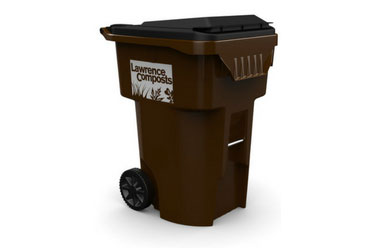
If you do not mulch mow nor compost your yard trimmings at home, or simply have too much to manage, the City of Lawrence will pick them up on Monday mornings, March through mid-December (weather permitting). Materials should be set out by 6:00 Monday mornings in a can, cart (available for $2 a month, call 832-3032) or compostable yard waste bag.
Plastic bags may not be used to contain grass and leaves, per City Code section 9-403.25. Note that grass and leaves are NOT collected with regular household trash when separate Monday collection is available. Click here for more details or here for our radio ads on this topic.
When collecting your yard trimmings for Mondays, be careful not to contaminate your them with inorganic debris or the herbicide ingredient Clopyralid (clo-PEER-a-lid), as your yard trimmings will be composted and then used by both the City and your fellow citizens (for distribution information, click here). Clopyralid is not like other herbicide ingredients in that it does not break down readily in compost. Thus it can persist in finished compost and may damage certain garden plants if contaminated compost is heavily applied. If using Clopyralid-containing products, please mulch-mow your clippings; do not set them out for Monday collection. For more information, please see our"Education is key to better compost..." page.
DISPOSAL OF TREE PRUNINGS
There are three options for disposal of woody wastes:
Woody Debris Drop-Off
Woody materials may be brought to the City Compost facility located at 1420 E 11th St (two blocks east of 11th and Haskell). on Saturdays ONLY April 12 through November 15, 2008 from 10 a.m. through 4 p.m. Charge per truckload is $3. For more details call Forestry at (785) 832-7979.
Curbside Collection- Monday collection for composting
Smaller woody debris is accepted with Monday morning yard trimmings collection. Monday materials should be in a can, cart, or compostable bag, sticking out no more than 12" above the container opening, or bundled appropriately (see below). Do not use wire for Monday bundles.
Curbside Collection- Trash day collection for landfill disposal
Woody debris (both large and small) may also be disposed of with your regular trash. To dispose, these items must be bundled securely and placed by your refuse container on your regular household trash collection day.
Bundles should not:
- exceed 5' in length nor exceed 18" in diameter
- weigh over 65 lbs. per bundle
WHY NOT JUST MULCH MOW?
More work does not always mean better results! Bagging your grass, hauling it, and throwing it out is a waste of your time and of your lawn's precious resources. Mulch mowing simply means mowing your lawn and letting it lay. But won't that contribute to thatch? Not at all. Check out this excerpt from the University of Illinois:
The primary component of thatch is turfgrass stems and roots. It accumulates as these plant parts buildup faster than they breakdown. Thatch problems are due to a combination of biological, cultural, and environmental factors. Cultural practices can have a big impact on thatch. For example, heavy nitrogen fertilizer applications or overwatering frequently contribute to thatch, because they cause the lawn to grow excessively fast. Avoid overfertilizing and overwatering. Despite popular belief, short clippings dropped on the lawn after mowing are not the cause of thatch buildup. Clippings are very high in water content and breakdown rapidly when returned to lawns after mowing, assuming lawns are mowed on a regular basis (not removing more than one-third of the leaf blade).
That excerpt mentions frequent mowing and not removing more than one-third of the grass blade. While this may sound like more work, a study has shown that although the lawn is mowed more often in proper mulch mowing, overall time spent is actually decreased, due to no hassling with bagging. Grass clippings contain valuable nutrients that can return 25% of your lawn's fertilizer needs. It is the most efficient way to recycle yard waste; it saves time, money, and improves your lawn all at the same time! A win-win situation any way you look at it.
For more information on mulch mowing (a.k.a. "grasscycling"), view our
Grasscycling Fact Sheet ![]()
PDF 299K | Requires Acrobat Reader
COMPOSTING
Compost consists of decayed organic matter and has been proven to be extremely successful when mixed with soil and used as a natural soil amendment. It may be used as a thin top dressing for lawns, as mulch around shrubs or young trees, or mixed into the soil in vegetable or flower gardens. By using the information below, you can turn your yard trimmings and kitchen scraps into rich compost with a little water, patience, and help from friendly microorganisms. As one Lawrence area Master Gardner put it, "this stuff is gold!"
Backyard Composting
For information on backyard composting, visit our Backyard Composting page.
Compost Bins For Sale
Compost bins are now available at a discount to Lawrence citizens receiving residential trash service from the City. Quantities are limited! Visit our Compost Bins page for details.
Community Compost Distribution
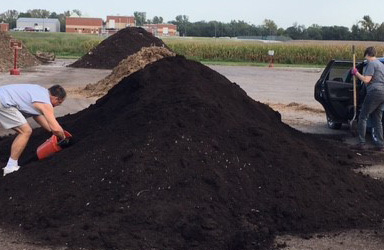
Lawrence Community Compost is made from the yard trimmings collected curbside on Monday mornings in Lawrence, as well as grass and leaves from commercial sources. When possible, the City releases this compost through Compost Distributions. Visit our organics distribution page for details.Composting and Clopyralid
For information on composting and Clopyralid, visit our "Education is key to better compost..."page
You may also view/print our
Compost and Clopyralid utility bill insert or our
Printer Friendly Clopyralid Brochure
PDF 254K
Worm Composting (Vermicomposting)
For information on vermicomposting, vist our Worm Composting page.
Wise Water Use
Xeriscaping Guide ![]()
PDF 266K | Requires Acrobat Reader
Water Conservation Landscaping Fact Sheet ![]()
PDF 151K | Requires Acrobat Reader
Tired of battling your lawn? Xeriscaping can design out resource and chemically intensive areas. Planned landscaped areas require fewer, if any, chemicals to maintain proper plant nutrition and health. Replacing lawns with perennial gardens or rock gardens will reduce your maintenance over time, reduce water usage, and decrease your dependency and chemical needs. For areas where lawn is desired, choose recommended turfgrass species suited to the area, fertilize sparingly, and grasscycle.
How to conserve water in your design
Start with a good design.
The first step in xeriscaping is to develop a good design. Sketch your yard with existing buildings, trees, shrubs, grass areas, and problem areas. In addition, consider the landscape budget, function, and appearance. Recognize limitations such as grade, exposure to sun and wind, size, etc. Consider installing your landscape in phases over a period of time to reduce initial water use and cost.
Use mulch.
Mulch is a material used to cover the soil. Most mulches are organic (wood chips, unfinished compost, straw) but inorganics such as lava rock or limestone can add an appealing, low maintenance touch. Good mulch conserves water by reducing moisture evaporation from the soil. The City's Parks and Recreation Department (Forestry Division) receives woody waste from commercial and residental sources, then has it ground into mulch for City and residential applications. For details about upcoming mulch sales, call Forestry at (785) 832-7979 or visit our compost and mulch distribution page here.
What mulch to use
| Plant | Best mulches | Thickness |
|---|---|---|
| Annuals or herbaceous perennials | compost, dry grass clippings, leaves, sawdust | 1-2 inches |
| Shrubs and trees | coarse wood chips or bark | 2-4 inches |
Improve soil.
To increase plant health and conserve water, till or spade organic matter into the soil of bed areas. Adding organic matter increases the soil's ability to absorb and store water in a form available to the plant.
Practical lawn areas.
It is wise to reduce the size of maintained lawn areas, since grasses require the most water and maintenance. Some grasses are better than others for certain conditions. Warm season drought resistant species such as Zoyzia grass, Buffalo grass, and Bermuda grass and cool season Tall Fescue are good for hot sunny areas. Good lawn substitutes are wildflowers, ground covers, and native or decorative grasses including Switch grass, Bluestem, and Indian grass. Decks, patios, and other hard surfaces of stone, brick or wood can be used to reduce lawn areas.
Choose low water use plants.
Native plants are found growing naturally in the Lawrence area, and are able to thrive in this climate (Zone 5). Low water use plants found in other parts of the world with similar climates adapt well, too. Native and low water use plants require regular deep watering up to two years after being planted. This helps them to become established and develop deep, healthy root systems. Most plants require one inch of water per week during the active growing season. Contact the Douglas County Extension Office, at (785) 843-7058, or local garden stores for help determining the right plants for your needs.
Watering.
Observe your plants and only water when they need it. These needs will vary depending on the species and soil/weather conditions. To test turf, walk across it. If walking across the grass leaves footprints, or the blades curl, it is time to water.
Remember to water early in the morning and water deeply. This encourages deeper root growth. Light, frequent watering can produce shallow roots that are susceptible to drought. Aerating your lawn will aid in water penetration.
Rain barrels
Rain barrels are a simple way to collect rainwater from your downspouts. Your plants will thank you, and so will the environment... possibly even your water bill. Visit our rain barrel page for details.
FERTILIZING
The misuse of fertilizers and pesticides contributes to non-point source pollution (runoff pollution from multiple sources, such as each individual's yard). Taken as a whole, residential lawns often create more chemical pollution than farmers' fields. Fertilizers contain phosphorus and nitrogen, which deplete oxygen in water, resulting in fish kills. Pesticides contain toxic chemicals that can harm aquatic organisms and plants, as well as animals like your pet or yourself. To remedy this problem, lawn care should be done with attention to the actual needs of your lawn and label instructions should always be read and followed.
A good place to start is by getting a personal soil test done by K-State Research and Extension, Douglas County. For more information call them at (785) 843-7058. In general, they have found that lawns in our area require more nitrogen than phosphorus and potassium.
Then, refer to the Rookie's Guide to Fertilizing in Douglas County (PDF 218K) for rate calculations and application tips. We also have a Birds and Pesticides (PDF 116K) fact sheet and one on non-toxic pest control (PDF 161K). If you are unable to access our fact sheets online, all are available by calling (785) 832-3030.